

LOLES VIVES JORBA was born in Manresa in 1957. She is a biologist, a specialist in sports nutrition, and a health communicator. She has worked as a personal trainer and a journalist, but above all she regards herself as a sprinter.
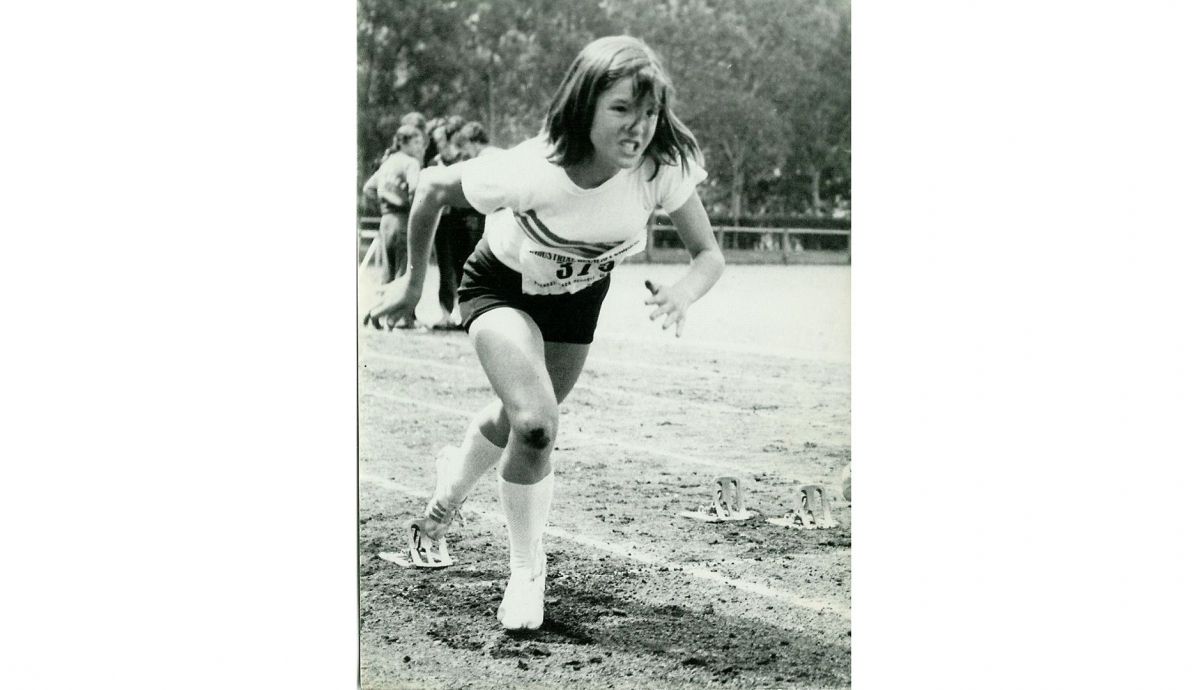
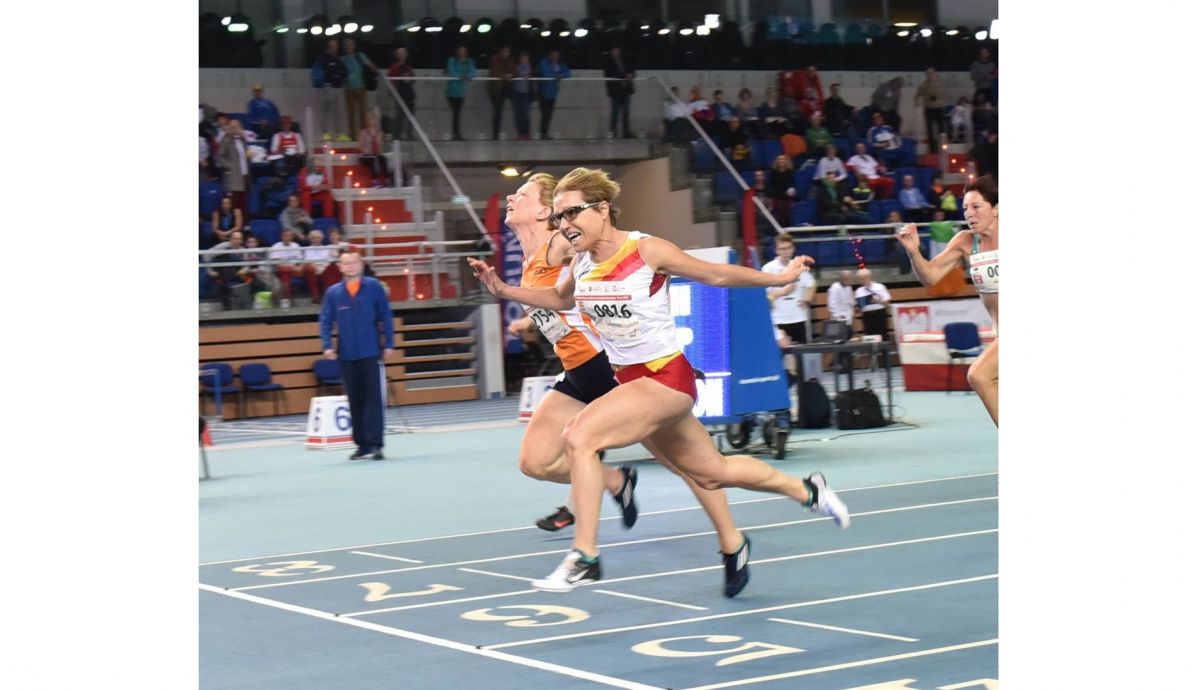
She began running in 1968 and she still does so today. She was the first Spanish woman to break 12 seconds in the 100 meters (1979) and she is a world and European champion in master’s category for sprinting and long jump.
She founded Gymhome, an agency that provides at-home personal training, a pioneering initiative that brought this service to Spain.
As a journalist, she covered the Olympic Games in Los Angeles 1984, Seoul 1988, Albertville 1992, and Barcelona 1992.
She is the author of “Pacta with the Devil” (2016), a book where she explains the ten clauses to stay forever young, healthy, and in shape.
Interview | Loles Vives: “Speed has no age”
1/ You started running in 1968 at age 11, and now, almost six decades later, at 69, you continue training and competing. What has kept you motivated to keep running?
I began running in Manresa, where I grew up, and my family had runners—cousins and siblings who were already into athletics. They were athletes in the 400 m, hammer throw, sprinters, etc.; in summer we did relays, and they told me I ran a lot. I loved artistic gymnastics, but in my first school race I did very well and they wanted to recruit me for the Manresa Athletic Club. When they brought home spike shoes, I was so excited… and since then I have never taken them off.
I had a hiatus in my running career for my professional life and to have my two children. I founded Gymhome, a concept new at the time, working as a home-based personal trainer; after having my second daughter I started getting back in shape and, at 40, I rejoined the sport. At first I wanted to focus only on long jump, but gradually I began posting better marks, returned to running, and here I am today.
2/ You were the first Spanish woman to break 12 seconds in the 100 meters and today you remain a master-category champion. How has your understanding of performance evolved? How important is competing now compared to enjoying the process?
I enjoy competing and I want to continue to compete until my body tells me I can’t. I always say I want to reach 100 years old running a 100.
These days I’m not as motivated by the time as by feeling that I can do it well, without pain and without needing ibuprofen or being lame. I recognize I no longer have the ambition I once had, but I’m tired of that phase now.
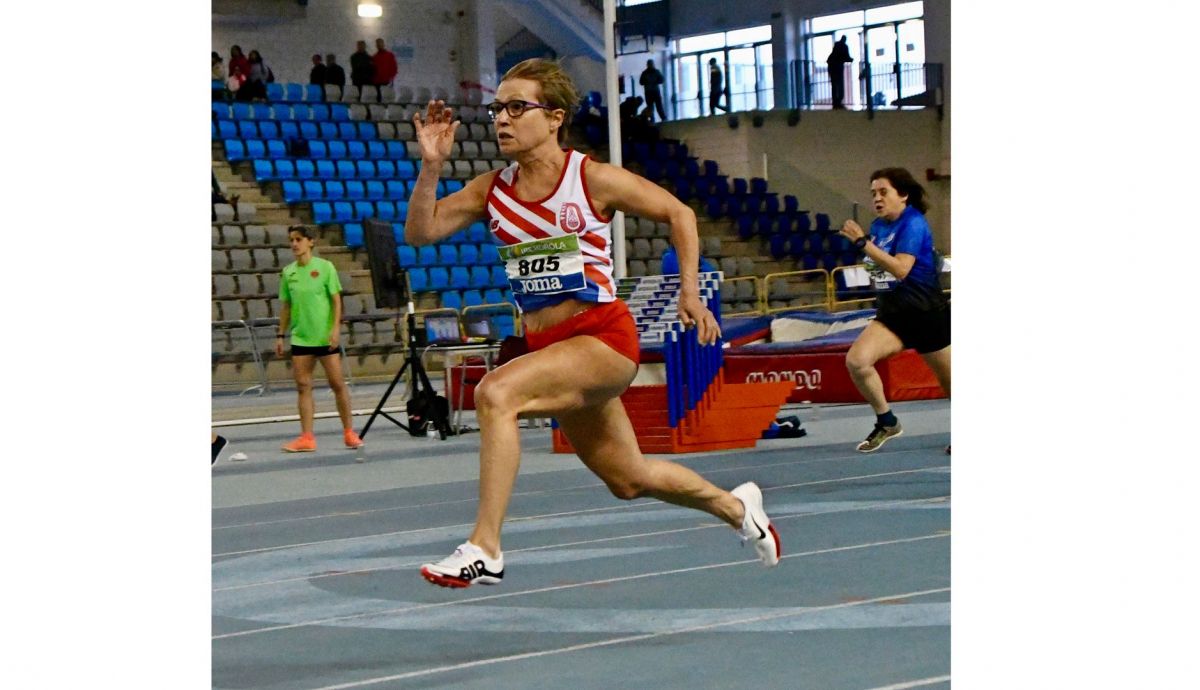
3/ At 69 you continue to train speed, a particularly demanding discipline. How has your training changed over the years?
What are you doing differently now compared to when you were an elite athlete?
Injuries and health issues have prompted changes. I carry an old gymnastics injury—a vertebral anterior listhesis—that causes lower back pain and sciatica and limits me when performing plyometrics, jumps, etc., which are essential for long jump. I adapt and perform controlled plyometrics with less volume than usual. I also have to work with weights carefully.
With age I’ve noticed I need more recovery time; in my early Masters era, at 49, I could do double sessions and train harder, and now I can’t accumulate as much training volume—fewer sets and less intensity. Before the pandemic I completely tore all three hamstring tendons and couldn’t have surgery; I had to recover with physiotherapy. Now I can’t sustain very fast speeds for long, my tendons are worn and there’s a high risk of rupture.
With age I need more recovery, I train every day, on the track during the competitive season 2-3 days a week. Right now, as I’m coming back from an injury and just starting, I alternate with at-home gym work, sled pulls, some stretches at the end.
In summer I also do some swimming, which is good for my spine. And every day, from the moment I wake up, I do mobility and work on agility, which becomes very important as you age; I like to move—dancing, doing lateral flips, etc.
And if one day I train hard, the next day I go lighter. I don’t follow a strict plan; I train according to how I wake up each morning, listening to my body and adapting. If I’m full of energy, that day I do jumps or speed; if not, I tone it down.
4/ In a longevity-focused feature, many readers will wonder what the secret is to staying strong and explosive at your age. If you had to name three indispensable habits, what would they be?
Strength: Weight training is essential, well-directed and with good technique and form.
Explosiveness: Prioritize movement speed. For example, fast squats and jumps. Do sprint sets that weren’t done before and are being incorporated more and more now.
Reactiveness: For me it’s innate; I react quickly to the start signal in a race, but it can be trained and maintained with age. Working with ground-level stimuli to start running, or jumping rope, not avoiding impact, always with care, etc.
5/ As a biologist and expert in sports nutrition, how has your approach to eating evolved? Is there a nutritional principle you consider non-negotiable to age healthily and maintain performance?
Nutrition has changed a lot over the years; before, eating to train was simply eating. When I was young we ate what we felt like; no one worried about weight—we were athletes and didn’t question much.
We were happy training and eating; perhaps we didn’t eat properly, but we had the advantage that there were no ultra-processed foods or so many unhealthy options. We were protected from eating disorders, which are more common now.
Now we know the importance of nutrition for both elite athletes and recreational athletes; you have to lead a healthy life, without alcohol or tobacco, and with a diet tailored to your training, whether you’re a distance runner or a sprinter.
Now everything is adjusted to the details. There’s a lot more emphasis on supplementation; I think sometimes people take too many things.
My non-negotiable nutritional principle is a varied diet that includes high-quality protein, healthy fats, and minimal sugars, healthy sauces, daily fruits, vegetables, and legumes, natural yogurts, and above all not running short on protein. My diet is basically plant-based, with a bit more animal protein.
I have been taking creatine for years, even before it became fashionable; it’s a supplement that has long been recommended for sprinters. I also take omega-3 as an anti-inflammatory and omega-7 due to cataract concerns. Magnesium before bed and vitamin D, which was borderline in my blood work, is the supplement I take most. And I take curcumin as an anti-inflammatory.
6/ We often talk a lot about training, but less about rest. What role do sleep, recovery, and stress management play in your day-to-day life?
I have always valued a lot of sleep; it’s essential for me. If I do intervals or intense training, I need about an hour of rest after eating—whether that’s a nap or simply lying down. I go to physical therapy and get massages, but since I didn’t have them when I was younger, I find it hard to go; I only go when I have injuries. If my muscles are particularly tight, a recovery massage or Indiba helps.
7/ As we age, small pains, injuries, or limitations appear. How do you discern when to listen to your body and when to simply keep training intelligently?
It’s tricky. When I was younger, if something hurt I thought it didn’t matter, but now, after many bad experiences from not listening to myself, I prefer to listen to my body and stop, doing one set less than I would have otherwise.
8/ In your book Pacta con el Diablo you propose ten keys to staying young, healthy, and in shape. Ten years after its publication, do you still defend those principles? Is there one you would highlight above the others today?
I would change many things, for example in nutrition with all we know now. I would also add the importance of mental health, which wasn’t considered before.
What I emphasize above all is continuing to exercise as you age, with strength and high-intensity training, healthy eating and without obsessions, avoiding toxins (drugs, tobacco, alcohol). And rest and recovery.
9/ After having been an elite athlete, coach, journalist, and communicator, do you think society is changing its approach to aging? What message would you like to convey to those who think it’s too late to start exercising?
It is changing a lot; more and more people of very advanced ages are physically and mentally well thanks to exercise. One can stay autonomous almost until the end.
My message is the same: start exercising, it’s never too late, you’ll see the most changes if you’ve never exercised, even if you’re 90. And you must eat well and rest and avoid toxins or self-medicating. Live without obsessions, take care of your mental health, without comparing yourself on social networks, or following advice that we don’t know if it’s real or suitable for you.
10/ If we interviewed you again in twenty years, what would you like to still be able to do?
I’d like to tell you that I still run fast and perform side flips… that I can still do the 100 m… and that I am healthy, still looking young at 89, approaching nonagenarian status.
And finally, could you share a phrase or motto that sums up your life and training philosophy?
I really connect with the line from cellist Pau Casals when, at 90, he was asked why he continued playing the cello and replied: Because I think I’m getting better. I feel the same; I keep training because each day I learn and continue progressing in my fitness and health.
You can find her on Instagram: @iloles and on her website: www.lolesvives.com
