
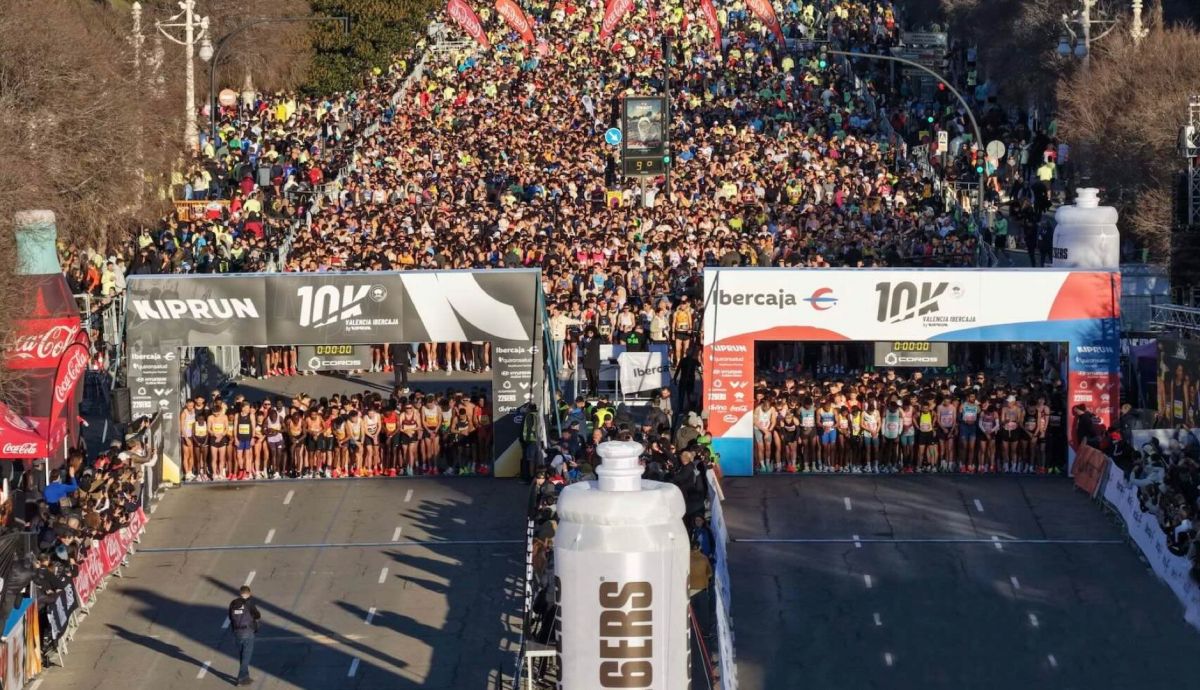
Running a kilometer in five minutes and running ten kilometers in a row at that pace are two different things. In the first you can push with your legs. In the tenth you need to have rationed your effort from the start. Preparation consists of getting used to the pace without exhausting in each session the energy you want to reserve for race day.
What pace should you run to reach 49 minutes and a bit
At exact 5:00 min/km you would reach 50:00. At 4:59 min/km, 49:50. And at 4:57 min/km, 49:30. If your goal is to shave a little, a few seconds of margin per kilometer can absorb small variations. Avoid seeking all that margin in the first straight. In a race, look at the kilometer markers as well as the clock. The instantaneous pace can fluctuate and you may cover slightly more distance if you have to pass others or you open up on curves. On a course with inclines, use the splits as reference and regulate effort on climbs and descents.
Start at the pace you can currently run
If you’ve just completed 51 or 52 minutes, you already have a reference to organize your preparation. Use your recent pace for the early sessions and edge toward the target as you gain control. If your best time is fairly far away, first work on improving the pace you can sustain today. If you’re not yet running regularly, dedicate several weeks to stabilizing that frequency before adding demanding work. Combine easy runs with intervals at different intensities, tailored to your level. If you train three days a week, a simple structure is to have one quality session, a conversational run, and a somewhat longer outing. You can distribute them, for example, on Tuesday, Thursday, and Sunday, so you have some margin between the days of greater load.
Three sessions to bring you closer to 5:00 per kilometer
- Short intervals to control the pace. Try 5×3 minutes near your current 10K pace, with 90 seconds of easy jog. If you’re coming from a 52-minute time, start around 5:12 min/km on flat ground and adjust according to how you feel. When you can maintain the five blocks regularly, test a few closer to the target pace. You can run three-minute intervals at a 10K pace with one-minute easy recoveries.
- Longer blocks to sustain the effort. When the short segments come out smoothly, you can alternate them with a session of 3×1500 meters near the target pace, with two minutes of easy jog. If you’re aiming for 4:59 min/km, each block will take about 7:29. Warm up beforehand with a progressive jog and finish easy. If in the second block you already have to fight for every meter, ease the pace on the last block. The workout helps you measure how much work you can absorb that week.
- Long run to complete the week. If you already run similar distances, a session of 50 to 70 minutes at a conversational pace can help you accumulate race time. Start from the duration you tolerate well. If your current longest outing lasts 45 minutes, you can maintain it or add a few minutes. In a week when you lengthen the quality session, it’s usually easier to gauge how you recover if you keep the rest steady.
How to distribute the effort on race day for the 10K
On a flat circuit, let the group stretch out during the first kilometer and aim for near five-minute pace as soon as you have space. If you pass kilometer 5 in 25:00, you can still make 49:50 with a second half in 24:50. That’s two seconds less per kilometer, a difference you can spread if you feel good. Between kilometers 6 and 8, check that you keep the rhythm without abrupt changes. If you reach the final stretch with a margin, accelerate gradually. In the week prior, shorten the duration of easy runs and keep a brief segment at the planned pace if you’re already used to it. Arriving rested will allow you to see how much of the work from the last weeks you can transfer to those ten consecutive kilometers.
