
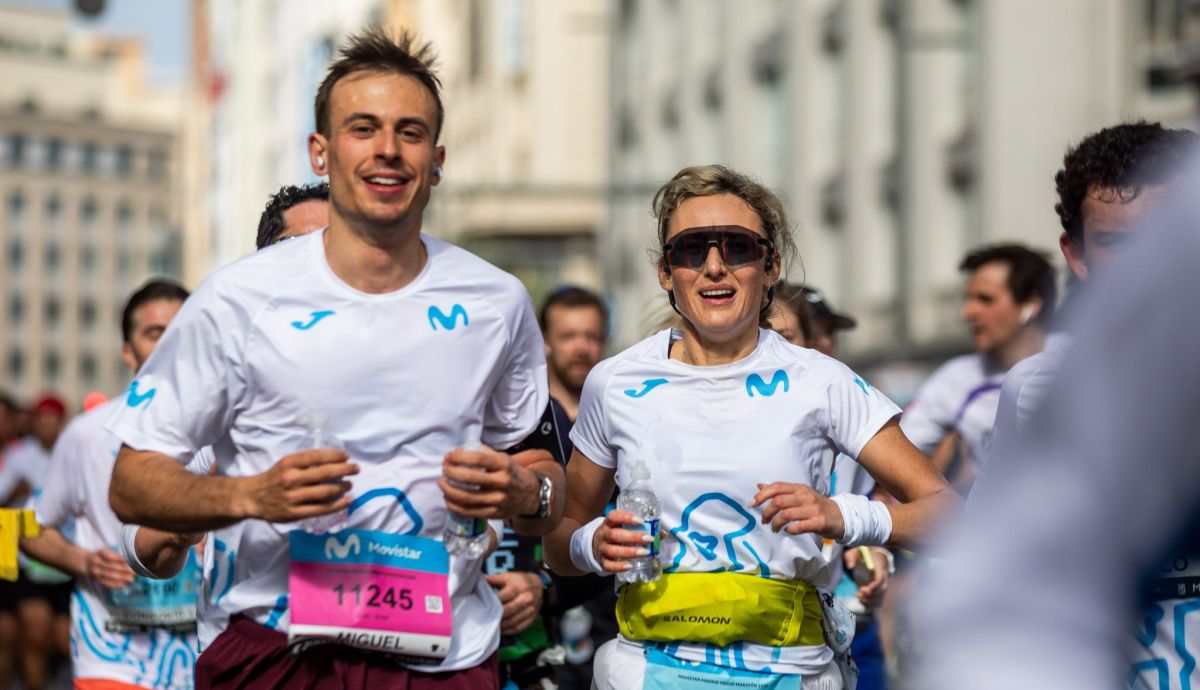
The fear — if not respect — for the distance is fading to the point where running a half marathon seems almost routine. Yet, if you truly commit during those 21 kilometers, you’ll discover that it is a demanding challenge that requires giving the body the time it needs to absorb the effort before returning to training with confidence.
How many days should we rest after running a half marathon? It depends on the race’s intensity and on each runner’s experience, but taking two to seven days before resuming regular training can be a good reference. That said, it isn’t the same to resume a light activity as to tackle a demanding training session.
We brought this question to one of the best coaches in our country, Jerónimo Bravo, who helped shed light on the matter.
“My first observation, before talking about rest, is to note that normally the worst for our body does not typically arrive within 24 hours of the race, but at 48. That is when we are most worn out if we have really pushed to the limit in the half marathon. If we are talking about a popular runner who is reasonably trained, it’s normal that they don’t return to normal training until Wednesday or Thursday. For the rest of us, it’s better to wait until Friday or Saturday. It’s wiser to err on the side of prudence than optimism to prevent injuries,” Bravo explains.
And what if we ran the half marathon as training for the marathon? In this case, the scenario changes considerably. If we faced the 21 kilometers as part of preparation for a marathon, without competing at full effort, the recovery should be much faster.
“If you ran the half marathon while training, say at your marathon pace, at 48 hours you should be practically recovered, since for you it would be like having done a long run. If not, something is off: you haven’t properly adjusted your expectations to your real physical state. As I say, if you’re not feeling like new in two days, you tell me how you’ll be able to run later at that pace for the marathon, where fatigue and physical wear spike,” Jerónimo notes.
That said, it’s important to remember that every runner responds differently to effort and that recovery also depends on prior preparation, the pace kept, and the conditions in which the race was run.
The recovery does not end when the soreness goes away
One of the most common mistakes is to resume intense training as soon as the muscular pain disappears. However, feeling better doesn’t necessarily mean the body is fully recovered. Muscle fatigue and tissue recovery can extend for several days, especially after pushing yourself to the limit.
Therefore, even if you feel fine on the third or fourth day, it doesn’t mean you’re ready to do intervals, pace changes, or a demanding session. Returning too soon to high-intensity workloads can increase the risk of discomfort and injuries.
The key is to listen to the body, assess how you feel, and progressively rebuild intensity.
How to return to running after the 21 kilometers
Resting does not necessarily mean staying inactive. In fact, during the early days we can turn to gentle activities that keep us moving without adding too much muscular load. Jerónimo Bravo recommends options like swimming, low-intensity cycling, or calm walks. “There are many options: swimming, easy cycling, and even gentle walks. They’re alternatives to stay active, but without impact.”
Once the sensations are good, we can return to running with workouts of about 30 minutes at a very comfortable pace. From there, it’s wise to progressively increase duration and intensity, reserving the more demanding sessions for when recovery is complete.
Sleep, hydration, and eating are also training
Recovery does not depend solely on the kilometers we stop running. Getting enough sleep, replenishing fluids, and consuming a proper amount of carbohydrates and proteins helps restore energy stores and repair tissues.
It’s also prudent to avoid alcohol during recovery and not push stretches when the muscles are still sore.
