
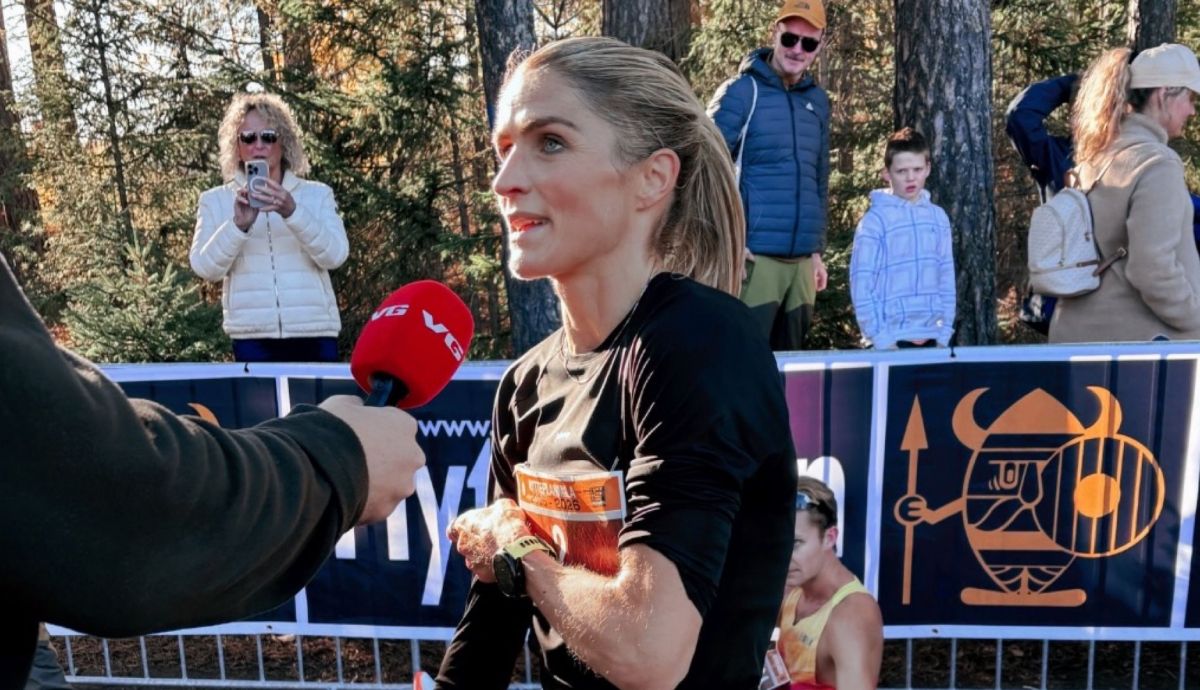
Therese Johaug has become one of the unexpected standouts in the Valencia Marathon 2026 preview. The Norwegian, one of the great legends of cross-country skiing, will embark on her 42.195-kilometer debut on December 6, after posting remarkable performances in athletics: 1:08:43 in the half marathon in Copenhagen and 30:51 in the 10 kilometers at the Hytteplanmila. At 38, she aims to discover how far she can go on the asphalt and even dreams of qualifying for the Los Angeles 2028 Olympic Games.
Her athletic trajectory largely explains the expectations she has raised. Johaug is a four-time Olympic champion and captured 14 world titles in cross-country skiing, solidifying her status as one of the most dominant athletes of her generation. However, her career was irrevocably marked by a doping sanction in 2016. She tested positive for clostebol and later claimed that she had used a cream to treat sun-induced lip burns after trusting the team doctor, who supplied the product.
A Popular Registration and a Last-Minute Request
The Valencia controversy originates in the Norwegian’s own registration. According to the organizers, Johaug initially joined the race using a code corresponding to the popular category. Subsequently, she requested to be moved to the lane reserved for the top athletes. A request that was denied. The Valencia Marathon maintains that, after internal deliberation, there were other candidates more suitable to fill the few elite bibs that remained available.
Her mark will be official, will be communicated to World Athletics, and she could be eligible for prize money if she achieves any.
The decision has practical consequences for her debut. Johaug will be able to compete normally from the yellow corral, reserved for runners with expected finish times between 2:20:00 and 2:29:59, the time window she aspires to. Her mark will be official, will be communicated to World Athletics, and she may be eligible for prize money if she achieves any. However, she will not have access to the space reserved for the elite start nor to the exclusive warm-up area. The Norwegian camp has lamented that she cannot enjoy the best possible conditions to tackle a race in which she hopes to demonstrate her potential over the distance.
The Anti-Doping Policy of Valencia, in the Background of the Controversy
The organization has publicly defended its decision and has taken the opportunity to reaffirm its commitment to sporting integrity. In its response to questions about the case, the Valencia Marathon states that it has been “years suffering the consequences of cheaters, both in sport and economically,” and that it reviews the histories of the more than 450 high-level athletes who participate in its race. It also remembers that “any marathon has the authority to decide whom it grants elite or sub-elite bibs, always within its selection criteria.”
The Norwegian was sanctioned for a positive in cross-country skiing, not in athletics, which adds a relevant nuance to this case.
When directly questioned about Johaug’s past, the organization insists that the decision was made on sporting grounds and does not imply an exclusion from the race. However, the Valencia regulations include restrictions for athletes with doping histories. The Norwegian was sanctioned for a positive in cross-country skiing, not in athletics, which adds a meaningful nuance to this case. The policy of the organizers is framed within a concern that also affects international athletics, as reflected by numerous doping sanctions.
