Let’s begin with the most essential and indispensable point if you want to successfully finish your first marathon:
Respect, yes; fear, no
That every year there are more people running marathons doesn’t mean that it has become easier or more affordable than before. It remains one of the most demanding athletic tests, where we push our bodies to the limit. Every year we encounter cases of people who participate with insufficient physical preparation, and this continues to be an act of negligence since we are putting our own health at risk.
There is nothing but to stand at kilometer 35 of any marathon to see the difference between those who have prepared well and those who have not, or between those who have planned a good or a poor racing strategy.
Looking at the marathon with respect is very important, even when you are an experienced marathoner, but it should not be faced with fear either. Fear blocks us, causes emotional stress, and affects the nervous system. The best solution to fear should be confidence. Have a plan and believe in it. Know that it is the roadmap that will lead you to your objective. Know the steps to follow, understand the phases you will experience, and, ultimately, reduce to a minimum the variables that can generate uncertainty, which will help you minimize fear.
The support and proximity offered by a specialized coach are of great value to enjoy the entire journey even more.
Start with a flat marathon
Try to ensure that your first marathon is not excessively demanding. A circuit with as little elevation change as possible will be much easier and will allow you to maintain your paces more consistently. If it is close to home, that is also advisable for your first marathon experience. The less you deviate from your usual routine, the better. And sleeping in your own bed before a marathon is a sign of good rest.
REQUIREMENTS TO FINISH UNDER 4 HOURS
REQUIREMENTS TO FINISH UNDER 3h 30′

Set Your Goal Clearly
We will use a business-world methodology to define our objectives that is perfectly transferable to marathoning. The SMART methodology (Specific, Measurable, Achievable, Relevant, Time-bound) indicates that goals should be:
Another important factor you must determine is whether you have an “outcome goal” or a “progress goal.” In the first case, all your motivation is conditioned by the desire to realize a specific result. This generates a strong inner drive, but it is more unstable and constraining. If, by any chance, you finish without achieving it, the logical consequence would be frustration.
In the case of process goals, we can say that they are much more sustainable and are usually enjoyed much more. They consist of focusing more on the day-to-day details, on the steps to follow from the first day to the last until reaching the finish line. It is a much healthier and longer-lasting approach. The most common path, however, is to find a middle ground between both options.

Stay 100% calm
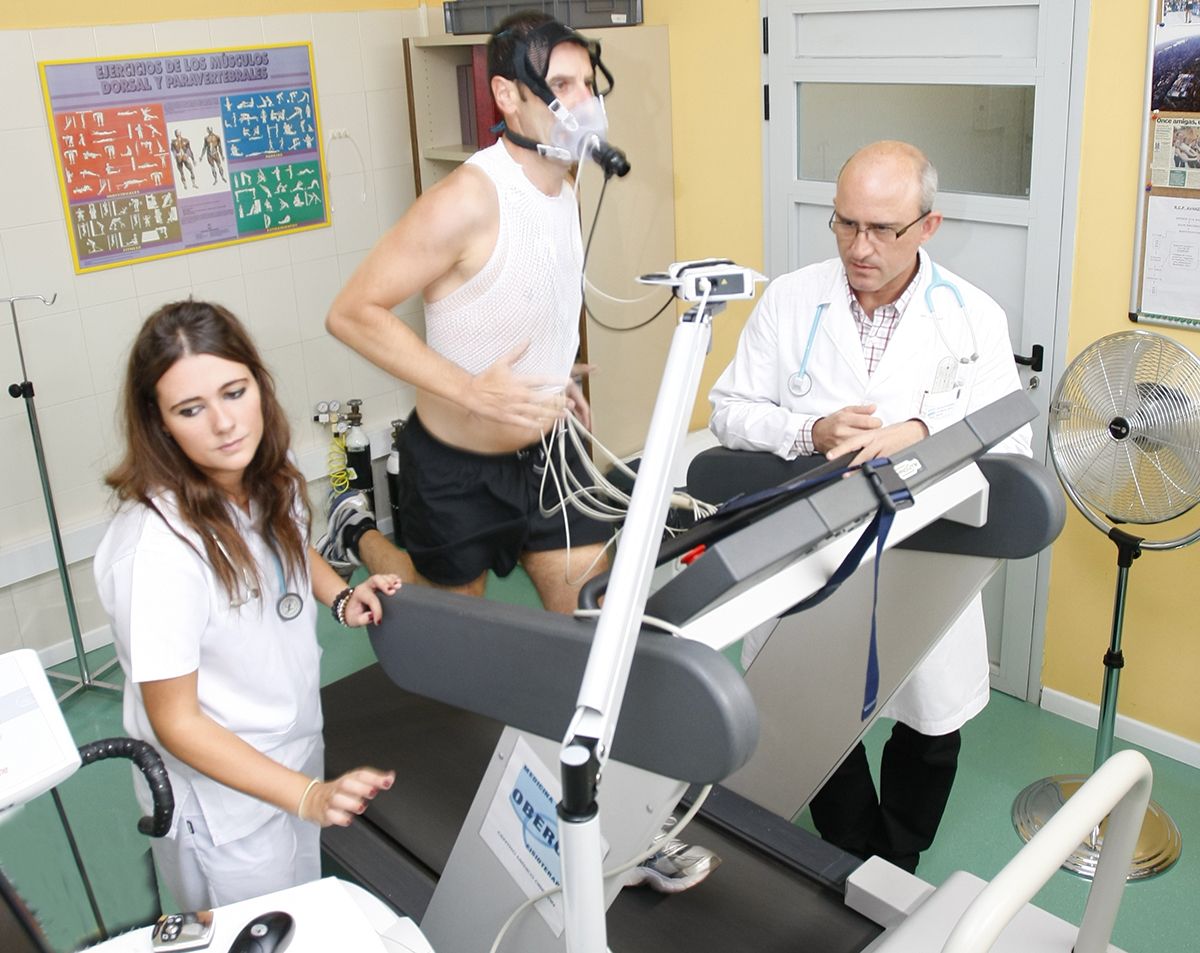
If you want to stay calm and know from the start that everything is in good shape, it is advisable to undergo the following tests:
If you have to choose one of the three, opt for the stress test. With its results you can determine your thresholds, which will help you approach every training with greater control. In addition, you will help your loved ones stay 100% calm as well. When we face physically demanding challenges, we cause concern in our surroundings.