
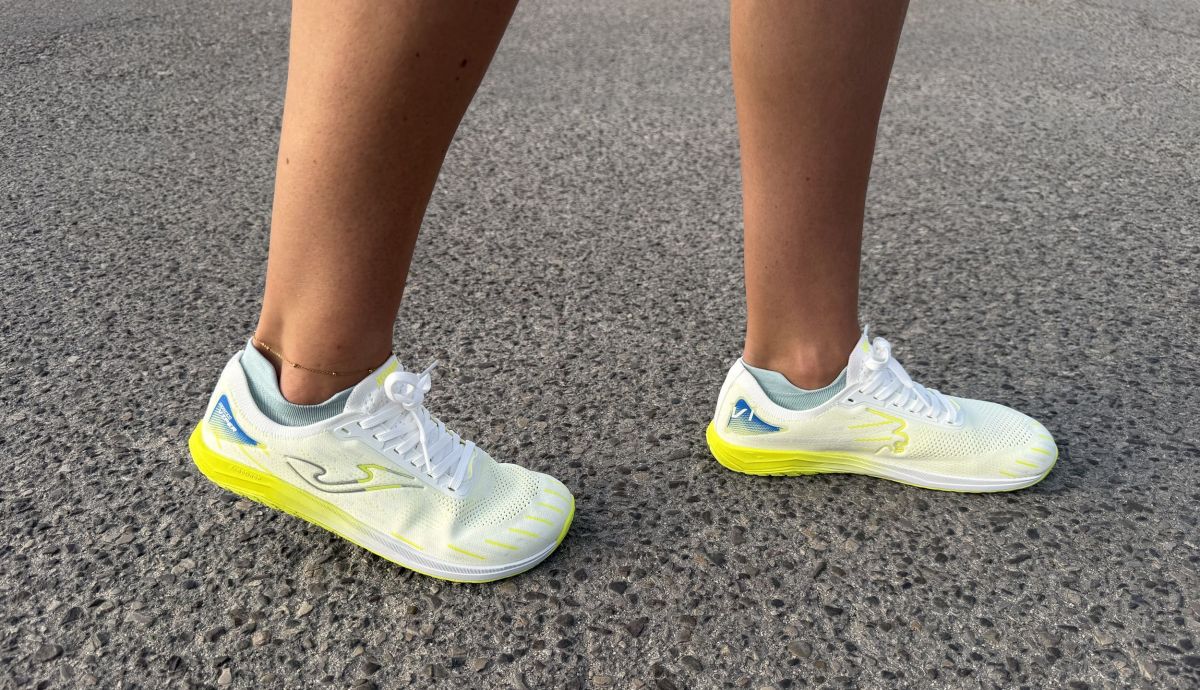
Barefoot running arouses curiosity, but also many questions: are we ready to run with a shoe that lets the foot work with much more freedom? What exactly changes in our gait? How long does the body need to adapt to a different way of relating to the ground?
With those questions in mind I began testing the Joma Viper Barefoot 26, a model designed specifically for running that starts from a seemingly simple idea: to respect the foot’s biomechanics as much as possible, to permit its natural movement and to reconnect with the ground in a much more direct way. But precisely that simplicity requires caution, because after years of running in a certain way, changing the stimulus also means giving the body time to learn how to manage it.
Two insoles for a gradual transition
And this is precisely where one of the elements I like most about Joma’s proposal makes particular sense: the Viper include two insoles so that the transition to barefoot can be done gradually.
This is, for me, one of the most interesting details of the model. The Viper include two different insoles, something especially important for those of us who have spent years running in conventional sneakers. One of them provides 5 mm of drop and works as an intermediate step before using the fully flat configuration. More than two insoles to choose from according to our preferences, I see them as two phases of the same process: start by reducing the drop and, when feet and musculature have adapted, move toward zero drop.Because the change is not minor. A runner used for years to shoes with drops of 6, 8 or even 10 millimeters, elevated profiles and highly cushioned midsoles has developed their running mechanics around those features. Removing suddenly a large part of that structure changes the demands placed on the foot and the rest of the kinetic chain.
Gastrocnemios, soleos y tendón de Aquiles, pero también la musculatura intrínseca del pie y las estructuras del antepié, trabajarán de una manera diferente. De ahí que una transición demasiado rápida pueda generar justamente el efecto contrario al que buscamos.Mi experiencia: caminar y hacer CACOs antes de correr
Con estas zapatillas he decidido hacer algo diferente a lo habitual. En lugar de estrenarlas directamente corriendo y completar un rodaje, de momento las he utilizado para caminar y hacer cacos alternando carrera y caminata, siempre sobre tierra.
La primera sensación es inmediata: sientes mucho más el terreno. El pie se mueve con libertad, la zapatilla flexa con él y cada apoyo transmite información que normalmente pasa más desapercibida. La sensación cambia radicalmente respecto a una zapatilla convencional: hay menos material bajo el pie, desaparece buena parte de la asistencia proporcionada por la espuma y la geometría y, en consecuencia, nuestro propio cuerpo tiene que asumir un mayor protagonismo.
Los cacos me están permitiendo introducir pequeños estímulos de carrera sin acumular demasiados minutos seguidos y, sobre todo, observar cómo responden pies, gemelos y sóleos durante el ejercicio y en las horas posteriores. En una prueba barefoot, creo que esa adaptación también forma parte del análisis.Upper y suela: todo al servicio de la libertad
El upper está confeccionado con hilo técnico ligero y transpirable e incorpora el sistema VTS de Joma para favorecer la ventilación. El espacio disponible permite que los dedos se expandan con mayor naturalidad, algo esencial para que el concepto barefoot tenga sentido.
La suela combina phylon y caucho y destaca especialmente por su flexibilidad. En lugar de dirigir el movimiento, busca acompañarlo, permitiendo que el pie flexione y se adapte al terreno con mucha más libertad. El caucho aporta además resistencia frente a la abrasión y el desgaste, algo especialmente importante cuando la cantidad de material que nos separa del suelo es mucho menor.
