
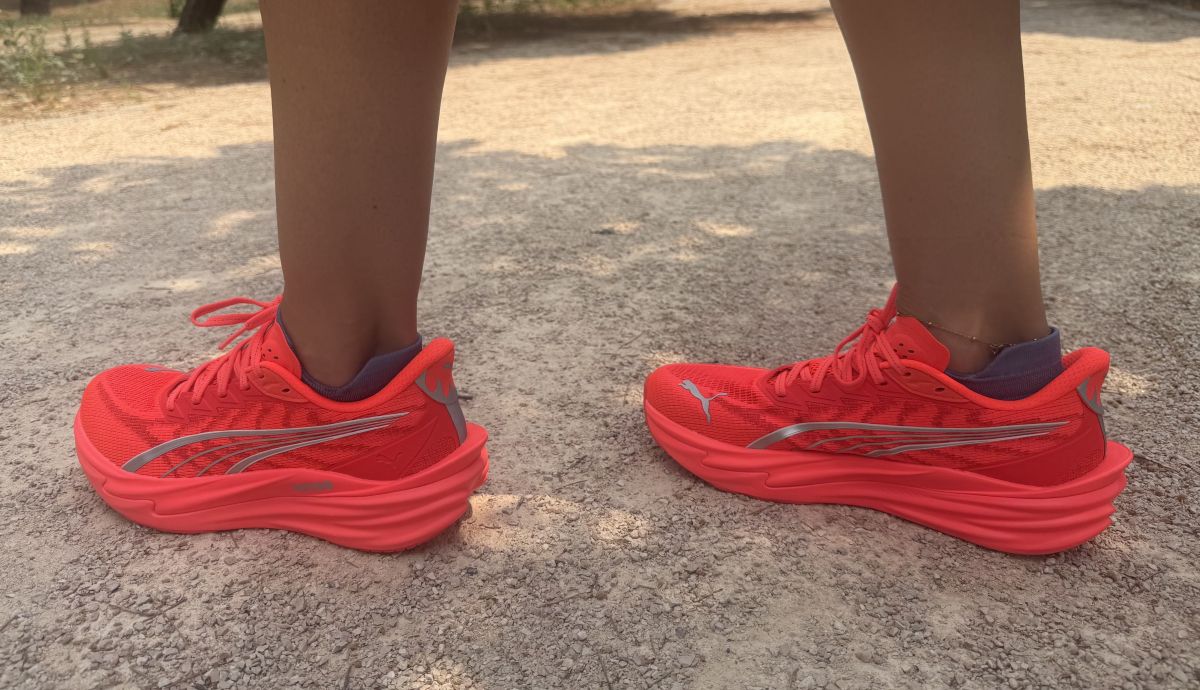
Not every day that we set out to run fast features a race on the horizon. A large part of the work happens through training—mixing up paces, stacking minutes at a demanding intensity, and training the legs to respond when it’s time to surge. And this is where I put the new PUMA Deviate NITRO 4 to the test, a pair of shoes that incorporate a carbon plate, yet whose approach goes beyond race day.
NITROFOAM y PWRPLATE: una combinación para entrenar rápido
The midsole includes Nitrofoam, a foam developed through a nitrogen-injection process aimed at combining lightweight cushioning with a responsive feel. Its function is to absorb part of the impact and provide an elastic response during the transition of the foot strike.
But one of the elements that defines the Deviate NITRO 4’s approach is its carbon fiber Pwrplate, designed to work in conjunction with the foam to boost propulsion. While we often associate carbon plates with racing shoes, their presence also makes sense in models oriented toward training. The plate alters the longitudinal stiffness of the overall unit and, depending on its geometry and the surrounding materials, can contribute to a smoother transition during the run.
With an 8 mm drop, they are designed for asphalt training, especially when aiming to run at demanding paces
Un upper que también piensa en la comodidad
The upper is made from lightweight, breathable technical mesh, paired with Pwrtape reinforcements in strategic zones to support the foot.
Here you also find a plush collar and a padded tongue, details that point to a design where comfort plays a key role, especially when sessions extend.
The outsole uses the Pumagrip compound, developed to deliver traction across different surfaces—a technology that Puma keeps in a large portion of its running line.
The brand also notes that the upper incorporates at least 20% recycled materials and sets a durability reference of 800 kilometers. This figure should be understood as the manufacturer’s estimate, since wear will depend on usage, the surface, and the individual runner’s characteristics.
Buenas sensaciones en fartleks y ritmos controlados
There are trainings that allow a shoe to be tested especially well, and for me fartlek sessions are one of them; moving from a recovery stretch to one of higher intensity forces a change in cadence and stride length, and lets you see how the setup responds when you ask for more.
I have used the Deviate Nitro 4 in this kind of sessions and also in controlled-pace training, with very positive impressions.
And as we said at the start, not every fast training session requires a pure racing shoe, and having a model designed to withstand a higher frequency of use broadens the options when organizing our footwear.
Deviate NITRO 4 and Deviate NITRO Elite 4: where do they differ?
A few months ago we reviewed the PUMA Deviate NITRO Elite 4, a model that left me with very good impressions for its lightness, dynamism, and responsiveness as speed increased.
Although both belong to the Deviate family and use a carbon plate, their approach is different.
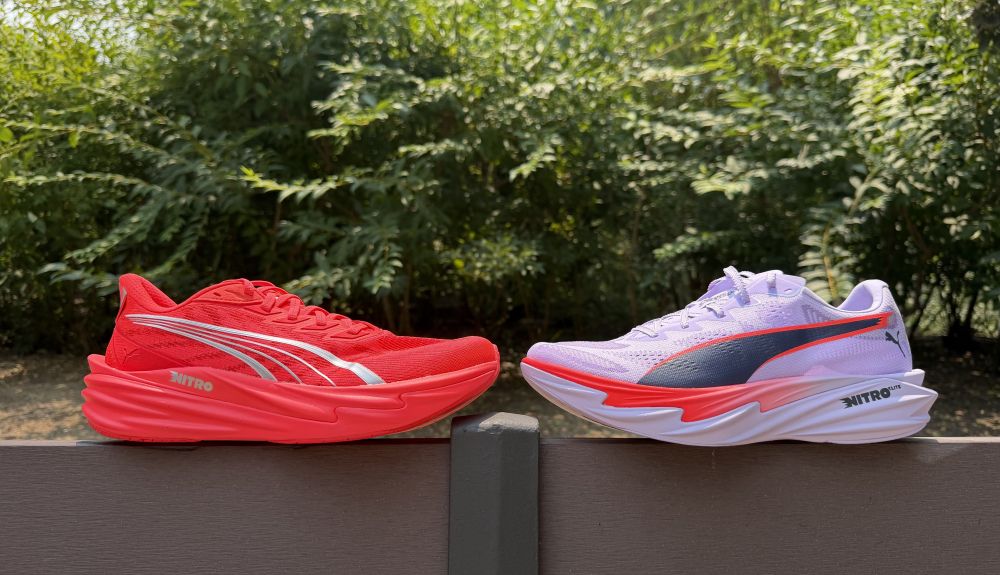
The Deviate NITRO 4 are aimed at training, especially sessions where we look to work at brisk paces. They incorporate Nitrofoam, the Pwrplate, and a build that pays attention to comfort and everyday use.
The Deviate NITRO Elite 4, on the other hand, are primarily intended for competition. Their Nitrofoam Elite foam, lighter construction, and carbon plate respond to a more race-focused performance pursuit.
The difference is also evident in price: the Deviate Nitro 4 sit around 170 euros, while the Elite 4 reach 249.95 euros.
This isn’t about deciding which is better, but about understanding what we need.
