
This Sunday, November 1, Andreas Almgren will face one of the biggest challenges of his athletic career. The Swedish runner will debut at the marathon distance in New York after becoming one of the world’s leading distance specialists in recent years. His choice is not exactly the easiest: New York is a demanding course, with bridges, pace changes, and a profile very different from the fast events in which he has shone in recent years.
Almgren, who before becoming a distance runner stood out in the 800 meters, has built a large part of his recent trajectory around an extraordinary aerobic capacity. Not by chance, the Swede arrives from a superb few months, having been crowned European champion in the 10,000 meters with a prodigious display and world champion in the half marathon with the European distance record. Now, the athlete faces a leap in distance that generates immense expectations in international athletics.
His specific preparation has taken place on the Flagstaff, Arizona, a town located about 2,300 meters above sea level that has become one of the habitual destinations for numerous elite athletes. There, he has combined a high volume of kilometers with threshold workouts, strength training, and sessions in a heat chamber to prepare the body for different stress conditions.
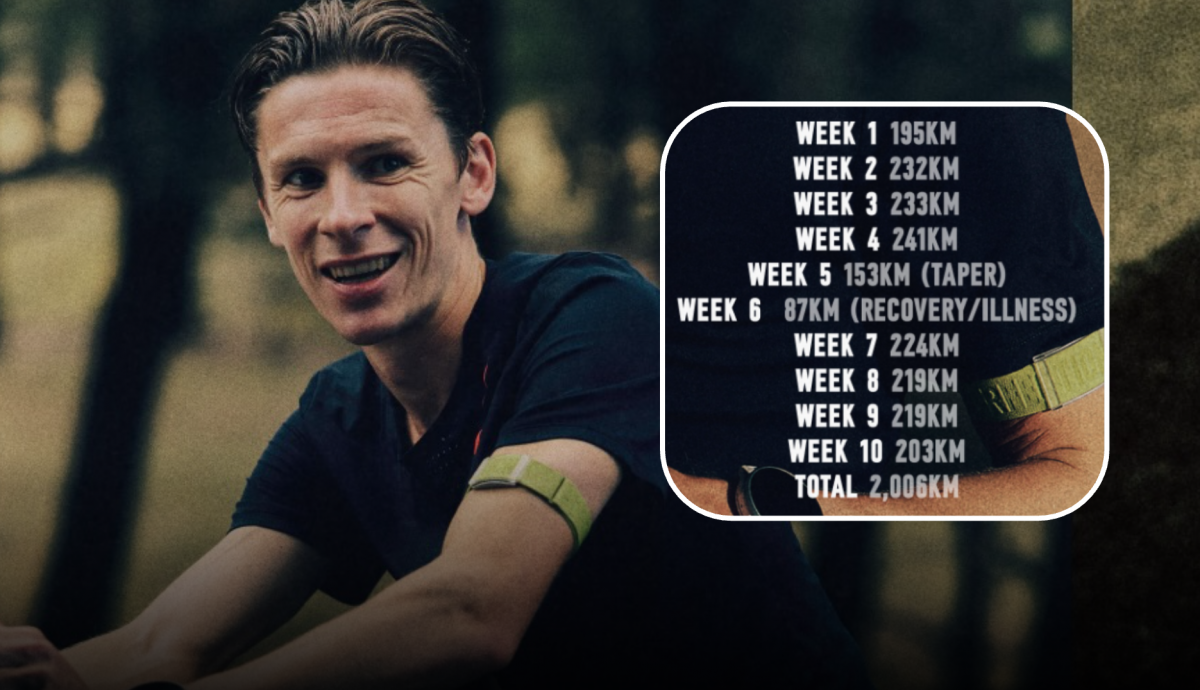
The 10 Weeks Preparing for the New York MarathonHow a Week of Peak Training Load Has Shaped Andreas Almgren
The training week gives an idea of the plan’s demands that the Swede has followed. Almgren has alternated two-a-day sessions, lactate-guided workouts, and long runs, with special attention to the ability to maintain the effort when fatigue begins to accumulate.
MONDAY: Easy run, heat chamber and strengthTUESDAY: double quality sessions
Almgren explained that lactate levels remained very controlled during the training. In the first eight repetitions he recorded 1.5 mmol/l, a sign that, despite the elevated paces, he was still working within a tolerable effort.
WEDNESDAY: heat, prevention and 20 km easy
THURSDAY: threshold and track intervals
The athlete described the first part of the session as a very controlled effort, with 1.7 mmol/l of lactate in the 2,000-meter blocks. In the 400-meter segments he increased the pace toward race pace for 10 kilometers, with readings of 2.7 mmol/l.
FRIDAY: easy run and running techniqueSATURDAY: 40 km progressive on a rolling course
The week’s most representative session arrived on Saturday. Almgren completed 40 kilometers progressive on a rolling route, aiming to reproduce some of the New York Marathon’s demands. These were his splits:
The last split equates to an average pace of 2:51/km, a reference particularly striking after having covered 30 kilometers. The athlete himself acknowledged that he finished with good sensations and that the training made him look with optimism at the jump to the distance: “After that training I thought: ‘Yes, this marathon thing isn’t so bad. I felt very good’.”
SUNDAY: double run and strength
View this post on Instagram
A Debut Against Some of the World’s Best Marathoners
The challenge will not be solely about completing the 42.195 kilometers for the first time. Almgren will face a top-tier field, led by Kenyan Benson Kipruto (2:02:16), along with names such as Deresa Geleta (2:02:38), CyBrian Kotut (2:03:22), Zouhair Talbi (2:03:45), Abdi Nageeye (2:04:20) and Geoffrey Kamworor (2:04:23).
Also slated are the Italian Iliass Aouani (2:04:26), the American Conner Mantz (2:04:43) and the Italian Yemaneberhan Crippa (2:05:18), among other specialists. Almgren will be one of the debutants in the event, alongside Patrick Kiprop and Ahmed Muhumed.The Swedish marks at shorter distances hint at extraordinary potential. However, forecasts based on his 10K and half-marathon records do not account for all the peculiarities of New York: the bridges, the pace changes, and the management of effort during the second half of the race.
On Sunday, we will see how far one of the fastest athletes in the world can go in his first marathon experience. His altitude training, threshold sessions, and above all those 40-kilometer progressive runs suggest that he is not approaching the venture as a mere touch, but as an opportunity to compete from day one.
