
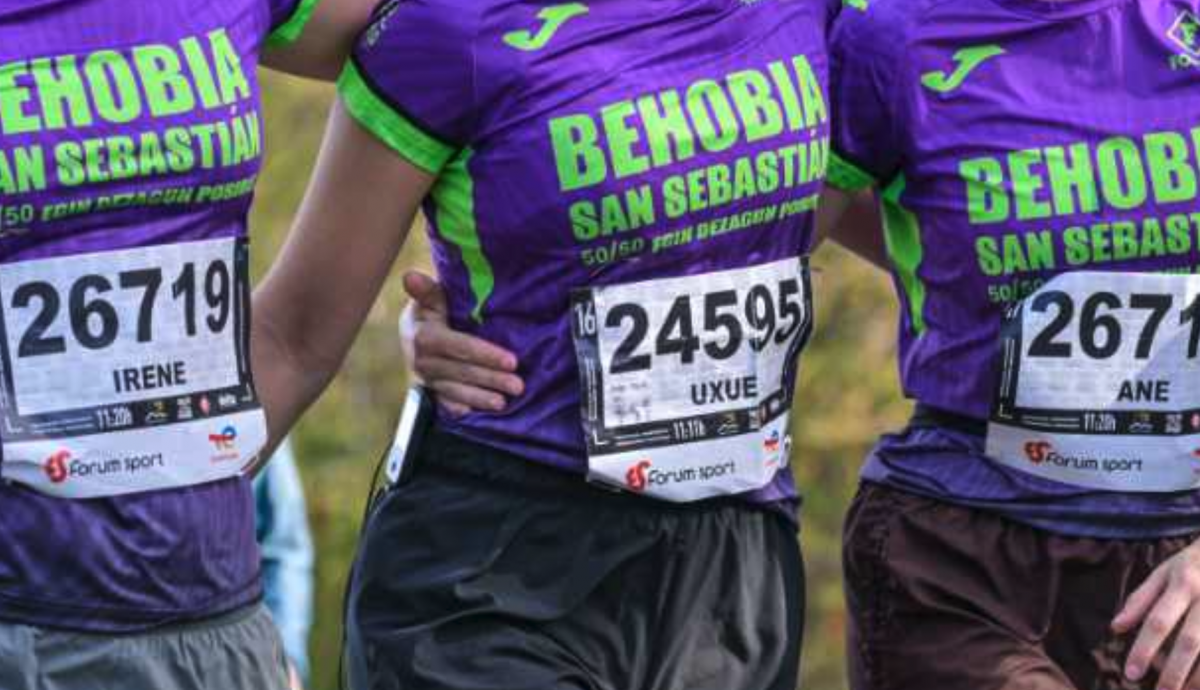
With less than a month to go until the Behobia-San Sebastián, one of the most emblematic popular races on the national calendar, its 20 kilometers with a demanding route and a very distinctive profile test both the legs and the ability to manage effort. At this stage, it isn’t about adding more miles at any price, but about arriving at the start with confidence and a job well done. These six tips can help you fine-tune your preparation.
1. Train the hills, but without exhausting yourself
The Behobia profile requires becoming familiar with the climbs, especially the ascent at Gaintxurizketa, the Capuchinos stretch, and the final climb to Alto de Miracruz. Take advantage of a session to run on hills at a controlled effort, without getting obsessed with pace per kilometer. The aim is to train the legs to shift intensity and keep an efficient stride when the terrain rises.
2. Don’t forget the downhills
Downhill sections also take their toll. Although they allow you to gain speed, they increase the eccentric load on the quadriceps and can leave the legs feeling taxed for the final kilometers. Include sessions on undulating terrain with progressive descents in some training, aiming for a light and controlled foot strike, without over-braking or letting yourself be carried by the slope.
3. Practice pace changes
Behobia doesn’t always allow for a constant pace. The climbs, descents, and the more favorable sections compel you to continually adapt effort. A good option is to perform a workout with blocks at race pace on undulating terrain, learning to regulate intensity according to the profile rather than chasing a fixed pace on the clock.
4. Rehearse your race strategy
Before the big day, decide how you will tackle the first kilometers and where you want to reserve energy. The excitement at the start can push you to run faster than planned, but spending too much energy early can bite you later after Capuchinos. Run by feel and effort, especially on the climbs, and leave room for the final stretch.
5. Test nutrition and gear
Do not debut shoes, socks, or garments on race day. Take advantage of long runs to verify that everything works and also rehearse the hydration strategy and the gels you plan to use. In a 20-kilometer test, the need to ingest energy depends on the expected time, intensity, and individual tolerance, so it’s wise to arrive with a proven plan.
6. Lighten the load as the race approaches
The final weeks are not the time to make up for missed training or to accumulate fatigue. Keep some intensity, but progressively reduce volume to arrive rested. Getting enough sleep, eating adequately, and respecting easy days are also part of the preparation. The goal is no longer to improve at any cost, but to absorb the work done and present yourself at the start with fresh legs.
