
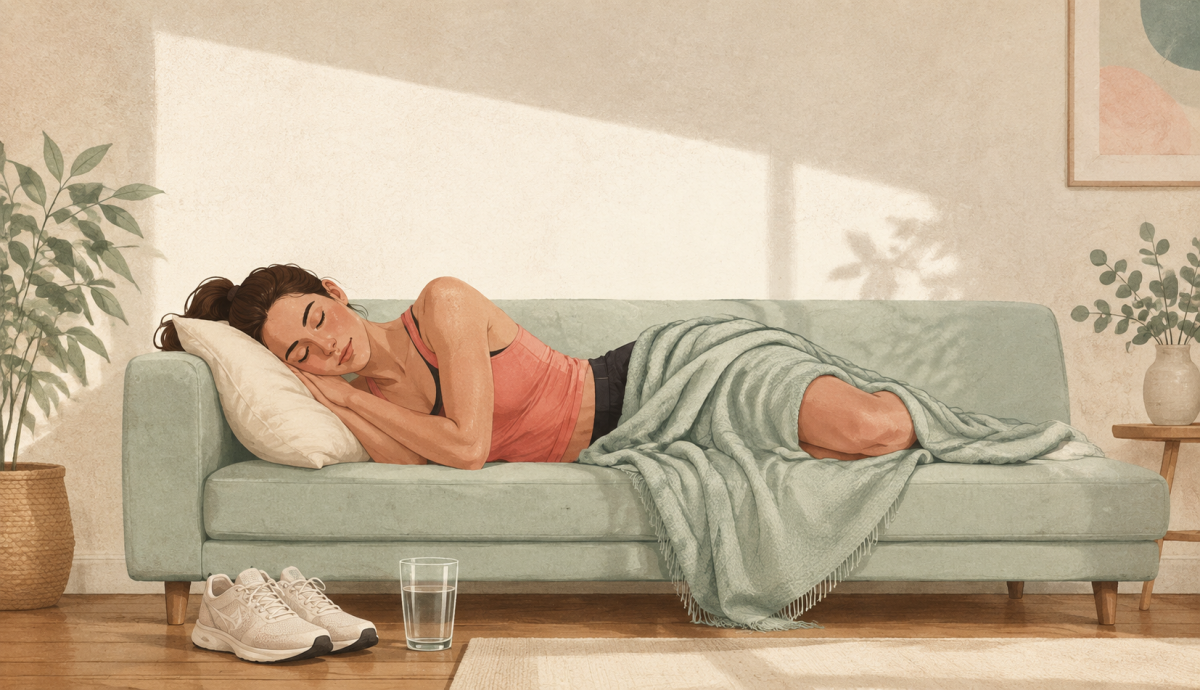
After running, showering, drinking, and eating, an irresistible sensation of sleep appears. Lying down for a few minutes seems a logical way to complete recovery. Napping can be beneficial, especially when the training has been early or the previous night was short, but a long nap or one taken too late can also make nighttime sleep harder. There is no perfect duration for everyone. A nap of 20 minutes and another of 90 minutes pursue different objectives and produce different awakenings. The key is to decide what you need to recover and how much margin you have before the next activity.
Sleep Is Part of Training
During sleep, processes related to hormonal regulation, immune function, motor learning, memory, and recovery of the nervous system develop. A nap does not instantly repair muscle damage or replace food, but it can complement nighttime rest and reduce perceived fatigue. A review published in British Journal of Sports Medicine highlights that the quantity and quality of sleep influence performance, recovery, cognitive function, and athletes’ health. When the runner sleeps little at night, adding a period of daytime sleep can help increase total rest accumulated over 24 hours. This is especially useful for those who train very early and had to set the alarm earlier without going to bed sooner. It can also help after a competition, a long run, or a night of travel. However, a nap should not become the permanent solution to a chronically insufficient sleep routine. If you need to sleep two hours every afternoon to function, it is worth reviewing nighttime rest, training load, and any other potential issues.
The Short Nap: 15 to 30 Minutes
A short nap aims to reduce sleepiness without entering deeply into sleep stages that can make waking more difficult. For many runners, a duration of 15–30 minutes is practical. It isn’t necessary to fall asleep immediately. The scheduled time represents an opportunity to rest, so it’s worth considering the minutes you normally need to fall asleep. This option fits well after a morning workout when in the afternoon there is work, study, or another session to handle. The person usually wakes with less heaviness than after an intermediate nap of uncertain length. A study published in European Journal of Sport Science observed that an afternoon brief nap could improve endurance performance in runners who had slept less than seven hours at night. The result does not imply that twenty minutes always improve times, but it shows that the nap can be particularly useful when there is a prior sleep debt.
The Long Nap: 60 to 90 Minutes
A longer nap allows completing deeper sleep stages and, in some cases, approaching a full sleep cycle. It can be appropriate after a clearly insufficient night, a trip, a demanding competition, or a substantial buildup of fatigue. A review published in Sports Medicine found that daytime naps could support physical and cognitive performance, especially when there was partial sleep deprivation. Some of the studies included observed better results with opportunities to sleep of roughly 90 minutes. This does not mean everyone should sleep for an hour and a half after training. A long nap takes more time, can cause greater sleep inertia upon waking, and has more chances of interfering with the night when done too late. The need also depends on prior rest. A person who has slept eight hours of quality sleep will likely derive less benefit from a long nap than someone who has rested five or six hours.
The Grogginess Problem
The sensation of confusion, sluggishness, and heaviness that appears after some naps is called sleep inertia. It is more likely when the alarm interrupts a deep stage or when there is a significant sleep debt. A review published in Nature and Science of Sleep advises allowing approximately 30 minutes between waking and a training session or competition. This margin helps regain alertness before performing an activity demanding coordination, speed, or decision-making. If you wake up after sleeping and feel disoriented, it is not advisable to immediately begin any intervals or drive to a workout. Walking, exposure to natural light, hydration, and performing the usual pre-exercise tasks facilitates a gradual recovery of alertness. A short nap typically reduces this risk, though it does not eliminate it. Individual response varies: some people wake easily, while others need quite a bit of time to clear their heads.
What Time Is Best to Sleep?
The period roughly between 1:00 p.m. and 4:00 p.m. tends to coincide with a natural dip in alertness. The review in Nature and Science of Sleep places precisely within that window a reasonable opportunity for athletes to nap. Sleeping late in the afternoon or at the start of the evening can reduce accumulated sleep pressure and make it harder to fall asleep at your usual time. This effect is more likely with long naps and in people who already suffer from insomnia. If you run in the afternoon, going to bed immediately after showering at seven or eight can fragment rest. In that case, it is often preferable to stay awake and shift your bedtime slightly earlier at night. The influence is not identical for everyone. A study with university athletes published in International Journal of Exercise Science did not find that the frequency, duration, or timing of naps necessarily related to poorer quality or duration of nocturnal sleep. Still, the individual reaction should guide the decision: if the nap repeatedly delays your main sleep, it is wise to shorten it or move it earlier.
Should You Sleep Immediately After Running?
You do not need to hop into bed as soon as the clock stops. First, it is wise to progressively reduce intensity, rehydrate, eat when appropriate, shower, and allow body temperature and activation to decline. After an intense session, the nervous system can remain activated and the body temperature can stay elevated. Some people feel tired but cannot fall asleep. Forcing a nap does not provide any additional benefit and can lead to frustration. A quiet period of rest without sleep can also be useful. Lying down, reducing stimuli, and closing your eyes for twenty minutes lowers activity, though it does not replace the physiological effects of sleep. The nap does not replace nutritional recovery either. If the workout has been long or demanding, it is not wise to lie down for hours without drinking or eating. Rest works best when accompanied by adequate replenishment of fluids, carbohydrates, and proteins.
When It Can Be Counterproductive
The nap may stop helping when it lasts well beyond what was planned, is taken too close to bedtime, or is used to continually compensate for inadequate rest schedules. It can also disrupt the routines of people who have difficulty falling asleep or staying asleep at night. Falling asleep involuntarily every day, experiencing irresistible sleepiness, or needing very long naps despite sleeping enough at night deserve professional consultation. Fatigue can also be related to excessive training load, energy deficit, anemia, sleep disorders, infections, or other health issues. Moreover, if after running you experience intense dizziness, confusion, headache, nausea, or heat-related weakness, the response should not be simply ‘sleep it off’. First you must cool the body, rehydrate, and assess the severity of the symptoms.
Which Nap to Choose After Running
If you have slept reasonably well and you are only seeking to recover alertness, try a nap of 15–30 minutes during the early afternoon. If there is a substantial sleep debt and you have time, a 60–90 minute window can provide a more thorough rest. Avoid placing a demanding session immediately after waking. Leave a sufficient margin to gauge how you feel and to regain activation. Finally, observe what happens at night. If you continue to fall asleep normally and wake up feeling recovered, the nap can fit into your routine. If it begins to delay or fragment your main sleep, it has stopped serving its purpose. Napping after a run can be good, but it is not mandatory nor a miracle cure. Its value depends on complementing — not replacing — a sufficient nighttime rest.
